Tuesday, July 3, 2018

THE CASE OF THE MARVELOUS MASON MACHINE – Mathew Paust


At long last it can be alleged: Perry Mason and his associates were in fact a highly classified cell of fantastics working undercover for nearly forty years combating heinous crime and prosecutorial incompetence in Southern California’s judiciary. Their morally dicey mission: to save well-financed damsels in dire distress against unimaginably implausible odds.
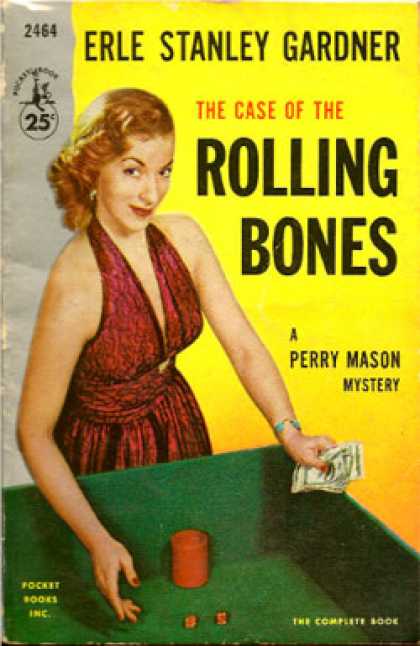
Mason, the cell’s lead operative posing as a dauntless criminal defense attorney, sheds light on the mission’s moral dilemma in this brief exchange with his purported secretary, Della Street, while considering a potential client’s tale of woe in The Case of the Rolling Bones:


“‘I don’t like rich people,’ Mason said, pushing his hands down in his pockets. ‘I like poor people.’”
“’Why?’ she asked, her voice showing her interest.”
“‘Darned if I know,’ Mason said. ‘Rich people worry too much, and their problems are too damn petty. They stew up a high blood pressure over a one-point drop in the interest rate. Poor people get right down to brass tacks: love, hunger, murder, forgery, embezzlement— things a man can sink his teeth into, things he can sympathize with.’”


Moments later Mason tells the distressed damsel, “If I take this case, I’ll need money—money for my services, money for investigation. I’ll hire a detective agency and put men to work. It’ll be expensive.”
One might get the notion from these two sentiments Mason didn’t like his clients, and maybe he ddidn’t. If not, it’s the more to his credit, as he tells the team’s uncannily effective chief investigator Paul Drake in their debut published case, that of the Velvet Claws, “It’s sort of an obsession with me to do the best I can for a client.”
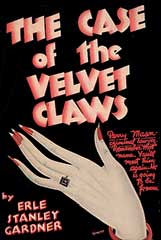
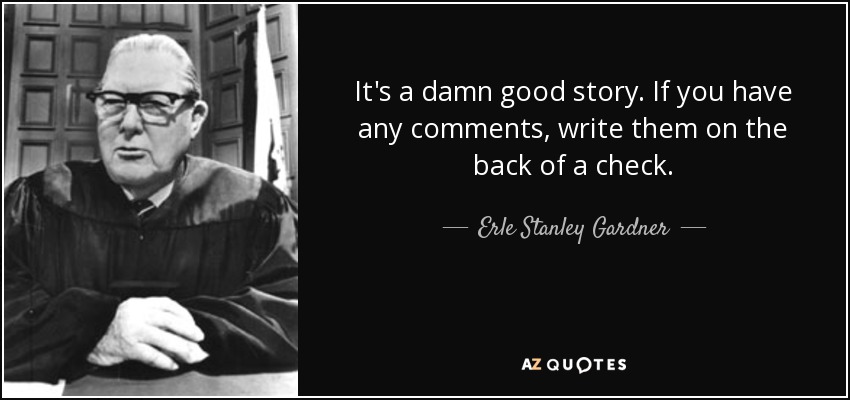
Erle Stanley Gardner, who controlled and chronicled the activities of what we shall call the Marvelous Mason Machine (MMM for short), gives us vivid descriptions of these superheros introducing them in this first of some 80 published cases. Mason, Gardner confides, “has about him the attitude of one who is waiting. His face in repose was like the face of a chess player who is studying the board. That face seldom changed expression. Only the eyes changed expression. He gave the impression of being a thinker and a fighter, a man who could work with infinite patience to jockey an adversary into just the right position, and then finish him with one terrific punch.”
And later, “His hand was well formed, long and tapering, yet the fingers seemed filled with competent strength. It seemed the hand could have a grip of crushing force should the occasion require.”
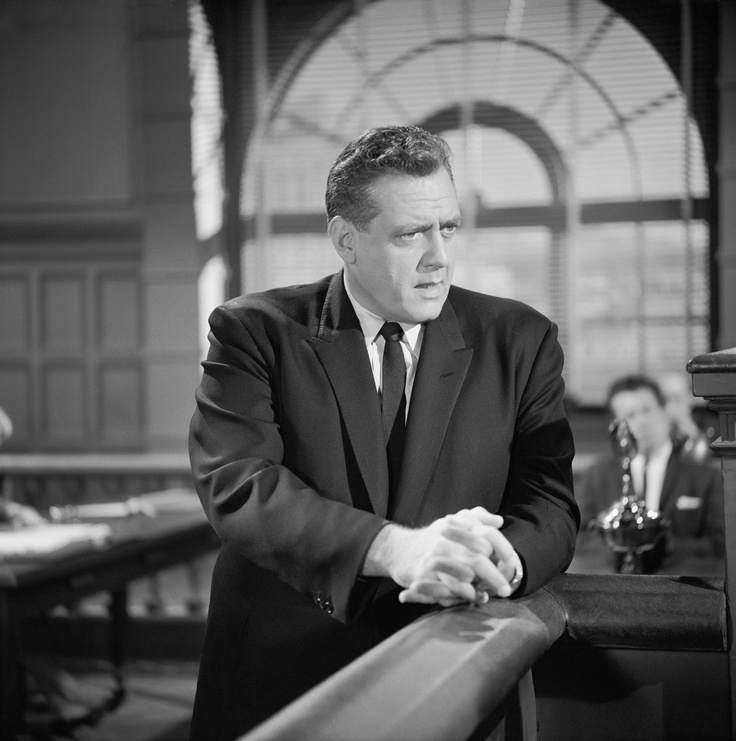
The lawyer’s “broad shoulders” are mentioned frequently, as are references to his athleticism and pugilistic nature. Sort of startling to encounter this Perry Mason after years of watching stout, sedentary windbag Raymond Burr in the TV role inspired by Mr. Gardner’s descriptions.
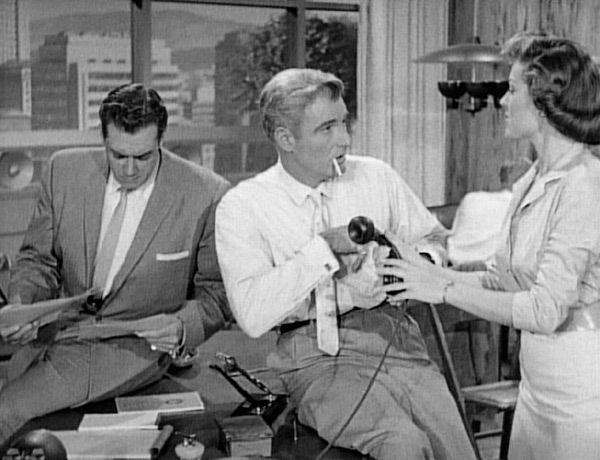
Similar startling contrasts are evident with Della Street and Paul Drake. In the original case files the two are a far cry from their bland portrayals on TV by Barbara Hale and William Hopper: Della Street has a slim figure and steady eyes. She’s about twenty-seven, and appears to be watching life keenly and appreciatively, seeing “far below the surface.” Her cover story? She came to work for MMM after her wealthy family “lost all their money.”
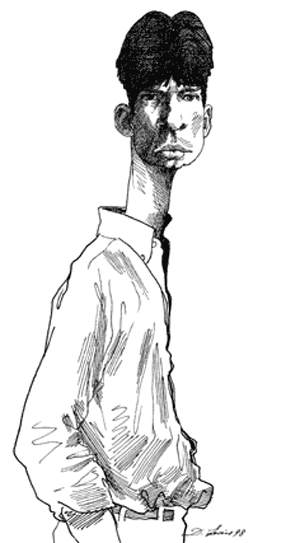
And Drake, who heads the gargantuan P.I. agency unobtrusively headquartered across the hall from Mason’s office is tall, with “protruding glassy eyes” that hold “a perpetual expression of droll humor,” whose shoulders droop and head thrusts forward on a long neck.
It’s just now occurred to me that maybe Mr. Gardner was deliberately misleading us with his team’s physical identities. It’s entirely reasonable he would wish to protect them in the event of reassignment to other, perhaps even hairier undertakings in the eternal struggle for truth, justice, and...so forth. At the moment, however, MMM’s superpowers are of greater interest than their appearances.
Granted, on the surface Mason and his crew display attributes one might expect in top-tier professionals of their kind--or at least which could be contained within mortal bounds. Mason’s NFL-linebacker’s physique, for example, the crushing grip, the pugnacious spirit, zen-like mental control, and I’m guessing he can make a fairly decent omelet or poached egg in a pinch. His legal knowledge may seem superhuman to some, but I would argue this appears so by comparison with the theatrically dim performances of prosecutors he routinely opposes. Fortunately Mason’s lawyerly skills are on par with those of the judges who try his cases—men, of course, as this was a time when even the formidable Della Street was regarded as “the girl” by none other than Gardner himself—who always ultimately agree with Mason despite his penchant for highly irregular courtroom practices. One might speculate as to whether Mason’s skills extended to some form of subtle hypnotic spellbinding of these strangely sympatico men of the bench.
We’re homing in here on just what it could have been beyond Mason’s competence, both physical and jurisprudential, that elevated him to the realm of superherodom. I postulate it was a cerebral brilliance that impinged upon the outer limits of some mechanical contraption on the order of, say, the Cray Supercomputer. Could it be that Perry Mason’s brain was either somehow melded with such a device or else had been implanted with a microchip that corresponded directly and instantaneously with some such? Else how could he reach beyond intuition, invariably with indomitable confidence, to know, for example, which of the four identities assumed by a suspect in various contexts was in fact the actual one, as he did in Rolling Bones? I mean Mason was supposed to be a lawyer, no? Not Carnac the Magnificent or Sherlock Holmes, for Pete’s sake!
Which brings us to Paul Drake, MMM’s detective but most certainly no Sherlock Holmes, either. Yet Drake NEVER FAILED! Whenever Mason needed someone shadowed, someone who might at that moment be sitting across from him in the office, he’d slip a note to Della Street, who’d slip across the hall to Drake, who’d immediately place an operative—sometimes waiting right in the building’s elevator--to tail the person to wherever he or she would go. Drake was always in his office when needed for this, and always had plenty of operatives available at a moment’s notice. And he had “correspondents” wherever in the world he needed them to pick up the trail of someone or obtain information the instant Drake contacted them.
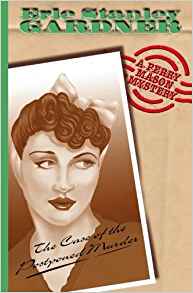
In The Case of the Postponed Murder, Gardner’s last report (published three years after his death in 1970), Drake literally overnight digs up evidence of a check forgery ostensibly committed by a missing woman Mason’s been hired to find and help.
Mason tells his client, claiming to be the woman’s sister, “Go see Paul Drake. In all probability, one of his operatives can locate your sister within twenty-four hours. If it turns out your sister is in any difficulty and she needs legal help, I’ll still be available.”
Della Street said, “This way, Miss Farr. I’ll take you to Mr Drake’s office.”
Next morning Drake tells Mason what he’d learned about the forgery, and predicts he’ll locate the woman in two or three hours.
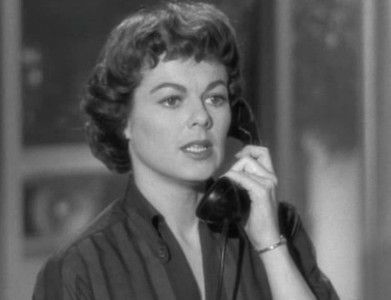
And we dare not overlook Della Street, who played a lower-keyed but equally effective role for the team. She could whip out a steno pad and take impeccable notes on what was being said anytime, anywhere. She also found things the men missed, and sometimes had help from cosmic convergence. In Rolling Bones she and Mason and Drake are musing over a woman Drake’s operatives have located. They’re not sure but whether the woman’s using a fake name. While they’re talking, Della Street is perusing the day’s newspapers’ classifieds. Within minutes, SHAZAM!!, she hits paydirt. “This what you want? ‘L. C. Conway, 57, to Marcia Whittaker, 23.’ Notice of intention to wed.”
My word!
I suppose my admiration for Mr. Gardner’s superheros would be all the greater had they applied their powers helping the “poor” people Mason said he preferred to the rich. But that would be unbelievable. After all how could impecunious clients support the most effective criminal defense law firm in Southern California and the largest, quickest, most honest, most successful detective agency ever known?
Could this very, very minor oddity have some bearing on why Albert Einstein hid his Perry Mason paperbacks behind the heavy physics tomes in his office at Princeton University? Relatively speaking, of course? Because that’s where William Tangney, Princetonian reporter later to become founding editor of Virginia’s York Town Crier, discovered them minutes after news of Einstein’s death reached the campus. Had the great man been honoring MMM’s elitist reputation by keeping its chronicles’ egalitarian publications discreetly concealed?
The prosecution rests, uneasily.


[For more Friday's Forgotten Books check the links on Patti Abbott's unforgettable blog]


Tuesday, June 26, 2018

THE ECHO MAKER – Richard Powers

I doubt I'd have been able to discuss The Echo Maker if I hadn't found something I thought was wrong with it. It's almost too daunting. "You stagger out of Powers’s novel happy to find yourself, like Scrooge the morning after, grasping your own bedpost, saying 'There’s no place like home,'" says Margaret Atwood in The New York Review of Books, "and hoping you still have a chance to set things right."
And Patrick Ness in The Guardian: "His books seem wrought rather than written, and try as he might, he can't help but make you feel just that little bit stupid."

I feel a little bit like Homer Simpson would trying to write about Finnegan's Wake, but I’m too stubborn to shirk making an effort, if only just to stitch together some of the erudite observations by vastly more sophisticated readers who dared to step forward and put them on the record. The Echo Maker, after all, is a must read for anyone busy being born, not busy dying (to steal shamelessly from a Nobel laureate).
And for those readers perched on the edge of their seats eagerly seeking an opening to accuse me of oversimplification with my observations, I hereby address their indubitably accurate assessment right here and now: The core notion in both Richard Powers novels I've read—The Echo Maker and The Overstory—condemns the human species as having evolved too far for its own good. We've come to know too much about too little, and too little about too much. In even simpler terms, because our lizard brains continue to call the shots despite what our higher intellect knows to be true, we are doomed. Powers brings the humility to us more delicately with this quote from Loren Eiseley's The Immense Journey:


As for men, those myriad little detached ponds with their own swarming corpuscular life, what were they but a way that water has of going about beyond the reach of rivers?


Be assured, Powers is a preacher. A preacher in the mold of those 18th century Boston Unitarian pulpiteers whose eloquent oratory nudged statesmen, merchants, and the general citizenry to set their sights a tad higher than base appetite and self-servitude. Morality for the sake of a civil society was the impetus then. It was good for everyone for each to be good. Not enough anymore, Powers contends. In fact it's likely way too late for good by anyone to do most anyone any good beyond the short-term illusion. As someone in the Bible must have said or at least pondered, we've pretty much sealed our fate.


[MOMENTARY INTERMISSION FOR WEEPING, EXCHANGING HUGS, BLOWING NOSES, AND RETURNING TO SEATS TO LEARN WHAT RICHARD POWERS DID WRONG IN THE ECHO MAKER]


Yes, I am most grateful to have found something to carp about in this incredibly, brilliantly overwhelming novel. It has to do with neither plot, science, philosophy, conjecture, or fluidity of thought, all of which contribute to the overall disquieting effect of The Echo Maker. My quibble is with the humble element of the writer's craft, about which I will have more to say after a brief synopsis/discussion of the astonishing features alluded to in the previous sentence. I probably shouldn't have said "brief," as I doubt I can be as concise as I, and you, most certainly would prefer. But please bear with me. I shall try, we shall see.
Powers brings his scenario of doom to us in the guise of several seemingly disparate narrative rivulets, each engaging us in its own way as it meanders through crises of purpose and identity edging incrementally closer to the others with a momentum toward confluence in a larger, more portentous story. A key to Powers's power is a storytelling gift that enables him to deliver conclusions from his boundless intellect in a palatable embrace accessible to curious muddlers like me. And Powers understands the importance of story, most likely more keenly than I, who without question would stumble pitiably off the foot bridge to understanding his wizardry without the rope of story to hold onto to steady my nerves. One of the principal characters in The Echo Maker, a cognitive neurologist, emphasizes its fundamental importance:


Consciousness works by telling a story, one that is whole, continuous, and stable. When that story breaks, consciousness rewrites it. Each revised draft claims to be the original. And so, when disease or accident interrupts us, we’re often the last to know.


The novel’s plot unfolds in the minds of three individuals besides the cognitive neurologist: a young man with brain damage who believes his sister is an imposter; the sister, who tries mightily to convince him she’s real, and Powers, constantly looking over everyone’s shoulder explaining what they see and are thinking, And there’s the irritation for me: too much ‘splaining and not enough showing. His kibitzing intrudes needlessly, tediously, and, as one professional reviewer put it, the prose lacks levity. Powers’s voice here brings to mind the brightest kid in class forever displaying his superior knowledge. The kind eager to explain in minute detail, without himself laughing, why a joke is funny. Possibly the only aspect of human cognizance Powers either doesn’t get or is blind to for its narrative value is subtlety.
Yet these shortcomings are mere nit specks in the extraordinary tapestry he has woven for us to make his point that we just might yet have a miniscule chance of getting our shit together in time to avoid flushing ourselves down the toilet of extinction.

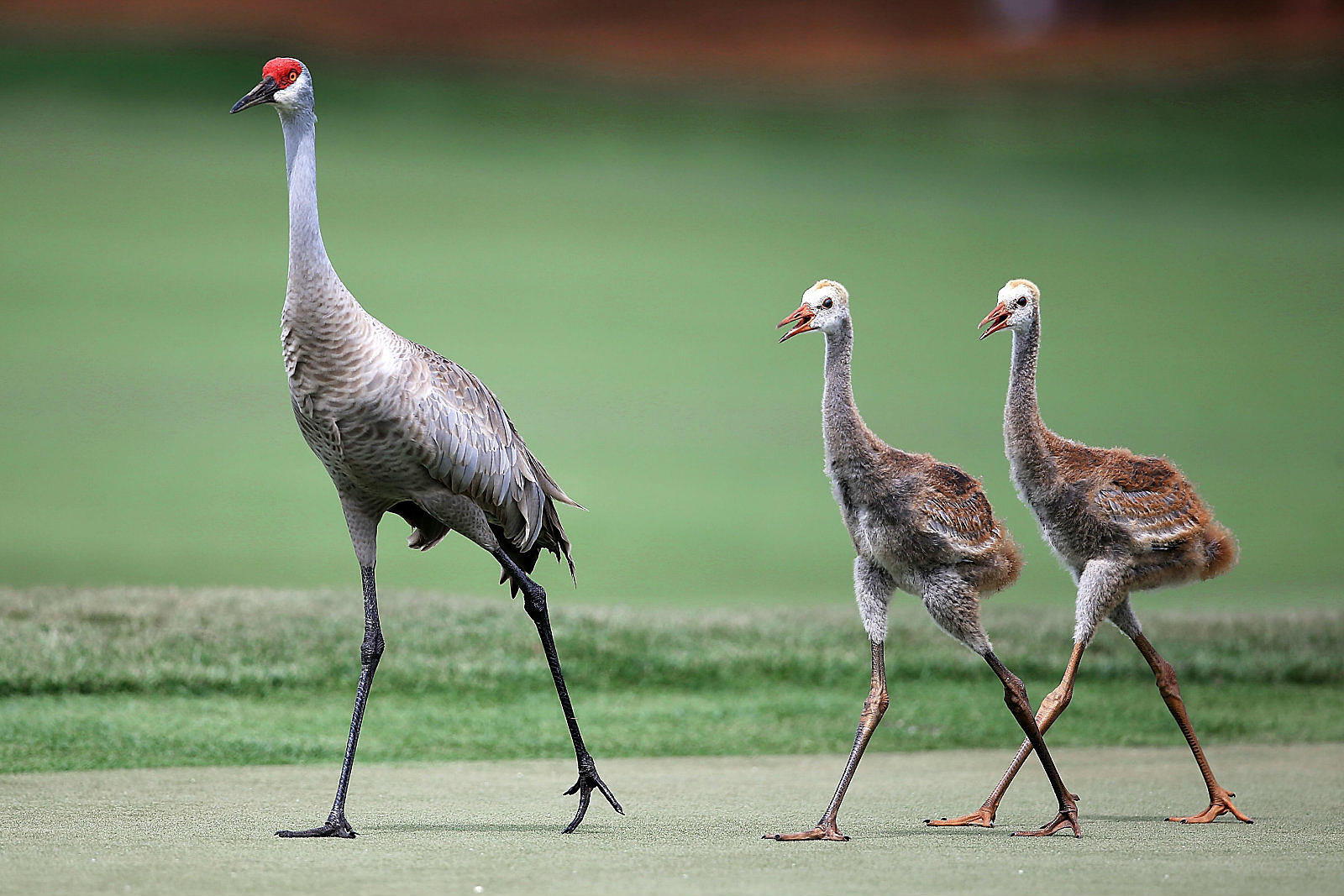
He uses as an analogy the marvelously mysterious sandhill crane, known by the very earliest Americans as “echo makers” for their unearthly cries. “All the humans revered Crane, the great orator,” Powers explains. “Where cranes gathered, their speech carried miles. The Aztecs called themselves the Crane People. One of the Anishinaabe clans was named the Cranes—Ajijak or Businassee—the Echo Makers. The Cranes were leaders, voices that called all people together. Crow and Cheyenne carved cranes’ leg bones into hollow flutes, echoing the echo maker.
Tecumseh tried to unite the scattered nations under the banner of Crane Power,’ Powers tells us, “but the Hopi mark for the crane’s foot became the world’s peace symbol. The crane’s foot—pie de grue—became that genealogist’s mark of branching descent, pedigree.”
These long-legged, graceful dancing birds land by the hundreds of thousands every year in a Nebraska marsh on their seasonal migrations. Two former lovers of the brain-damaged man’s sister are adversaries over disposition of the wetlands that host these legendary birds. One is a preservationist, the other a developer scheming to build a tourist facility to celebrate the birds in an ironic twist destroying their habitat.

One million species heading toward extinction,” says Daniel, one of the sister’s lovers. “We can’t be too choosy about our private paths.”
The sister muses, “Something in Daniel mourned more than the cranes. He needed humans to rise to their station: conscious and godlike, nature’s one shot at knowing and preserving itself. Instead, the one aware animal in creation had torched the place.”
One might think these details thicken the plot enough already. One would be wrong. It gets plenty thicker. Much of The Echo Maker has to do with the brain, of humans and others. My Homer Simpson wisdom ventures a guess that what Powers is doing with his dazzling exposition of cutting-edge neurological science is to show us how fractured we are, how amorphous and shifting is our sense of who we are and what we are, and how terribly wee we are in the cosmic scheme of it all.
Powers gives us science so mind-blitzing we can’t help but wonder at its veracity, yet we know from others who’ve done their Googling that it’s real. Anecdotes of people whose lives have been horribly deranged by injury or changes in their brain chemistry are enough to make me consider wearing a football helmet everywhere, even to bed.
Alright now here’s something that if it isn’t true Powers ought to be tarred and covered with crane feathers and made to get a better haircut. The following whacked me especially hard upside the head because I had exactly the described experience back in the day, although it wasn’t induced in the same way. No stream of electrodes was employed; mine came with the so-called illegal smile. Here’s the one with the juice (big words be damned):
Powers

Consider autoscopy and out-of-body experience. Neuroscientists in Geneva concluded that the events resulted from paroxysmal cerebral dysfunctions of the temporoparietal junction. A little electrical current to the proper spot in the right parietal cortex, and anyone could be made to float up to the ceiling and gaze back down on their abandoned body.


Wondering now if maybe that smile of mine (or its motivator) didn’t generate a certain mellow sort of buzz in my right parietal cortex. As it happened, I’d been watching Sam Ervin on TV gently interrogating White House Special Counsel John Dean.
In addition to the exhausting mystery of our brain, a more mundane question hovers over one of the narrative threads in The Echo Maker. Mark, the brain-damaged man, doesn’t remember how he came to flip his truck on a straightaway (albeit while driving some 80 m.p.h. at night) leaving him trapped under the three tons of steel in a marsh during the migrating sandhill crane layover. Author Powers gradually feeds us random clues, which, as all good mystery yarns should, merely awaken new questions and speculations as momentum builds to the solution, which, I daresay, is a lollapalooza.
Did I say there was no humor in The Echo Maker? I trust I didn’t put it quite like that. Something did give me a pretty good laugh, before a sudden lump in my throat made the verbal mirth sound a tad hollow. Here’s what caused the confusion:
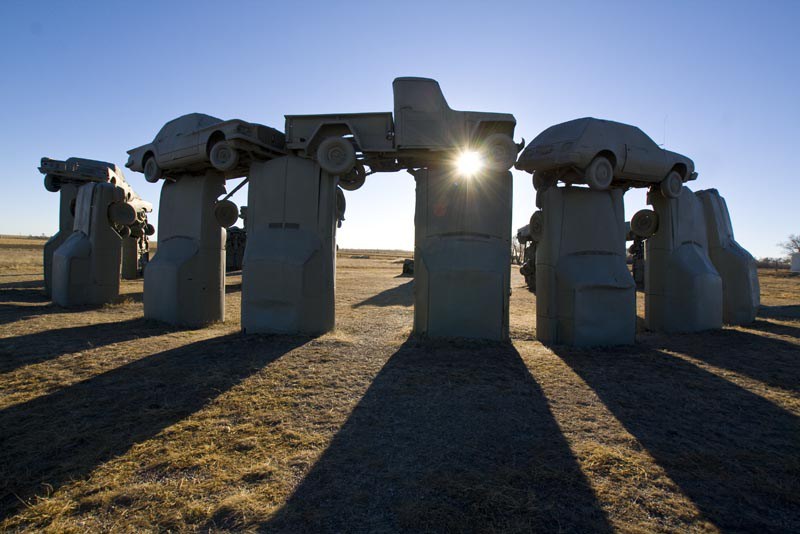
This is it. Carhenge,” says the brain scientist to his female companion. (They’re on a Nebraska road trip.) The huge gray stones turn into automobiles. Three dozen spray-painted junkers stood on end or draped as lintels across one another. A perfect replica. They are out of the car, walking around the standing circle. He manages a pained imitation of mirth. Here it is: the ideal memorial for the blinding skyrocket of humans, natural selection’s brief experiment with awareness. And everywhere, thousands of sparrows nest in the rusted axles.


Carhenge


[For more Friday's Forgotten Books check the links on Patti Abbott's unforgettable blog]


Wednesday, June 20, 2018

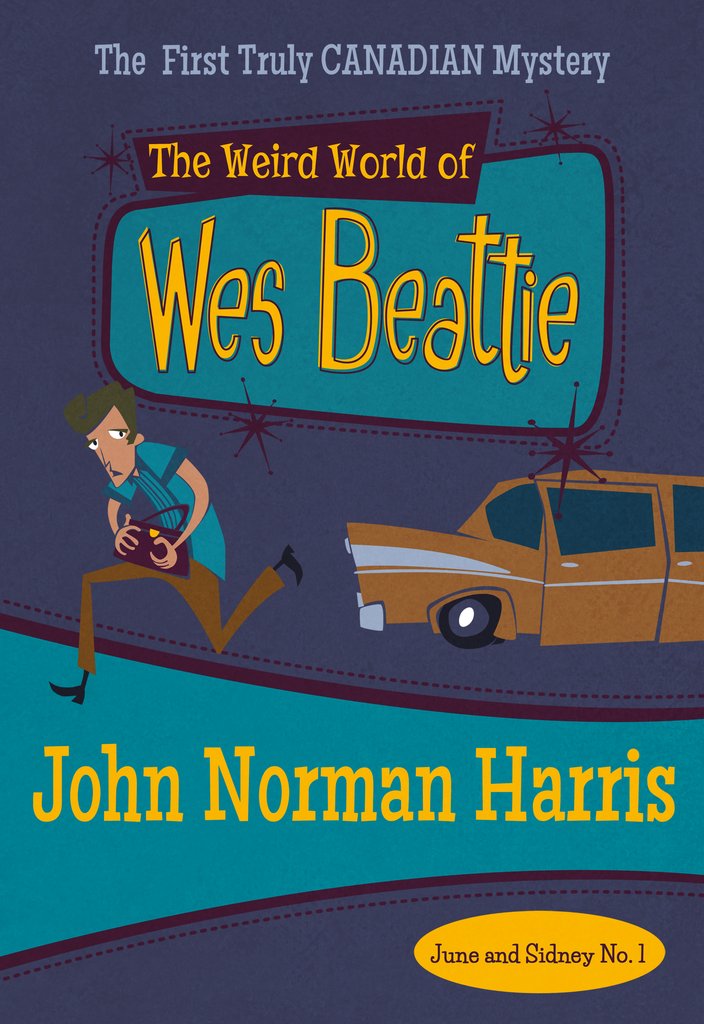
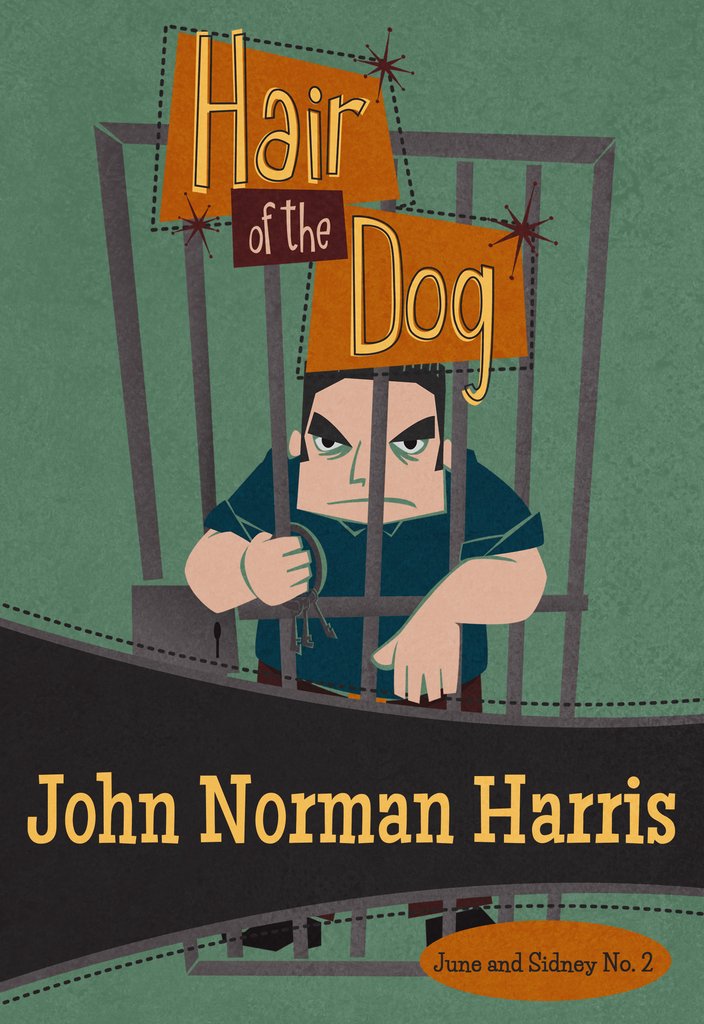
Twofer: THE WEIRD WORLD OF WES BEATTIE & HAIR OF THE DOG– John Norman Harris

The only way I could bring myself to follow blogging buddy John Norris's persuasive review of The Weird World of Wes Beattie was to pair it with the only other mystery Canadian author John Norman Harris wrote before his untimely death: Hair of the Dog. I say untimely because Harris was only 49 when he made his final great escape, and had he lived a tad longer he surely would have given us a few if not many more mysteries starring Sidney "Gargoyle" Grant and his wonderfully unconventional wife, June née Beattie. And I would be reading every one.

Gargoyle and June team up in The Weird World of Wes Beattie to save her loopy younger brother Wes from the loony bin for allegedly killing his favorite uncle, who was about to cut him out of his will. Wes Beattie’s wealthy family has retained a member of Parliament to represent their black-sheep relative in an insanity plea to avoid the shame of a public hanging as well as to keep the wacky kid locked up, thus avoiding future family embarrassments. The kid is known as such an outrageous liar he's confused himself into unwittingly confessing to the murder.
At least I think the above is accurate. The plot is so intricately woven I can’t be sure of every stinking little detail—despite the fact that in mysteries of this type, with intricately woven plots, any one of a thousand stinking little details might lead to solving the mystery. This is why Gargoyle Grant is so good. His extra large head encloses a brain so astute it can examine the tiniest of stinking details to the extent that if one of them can point him toward a solution to a mystery he will recognize it. Perhaps this is the time to provide a glimpse of Mr. Grant:

He was a short, slender man whose enormous head was surmounted by a mop of wiry black hair. He wore outsize horn-rim specs, behind which he frowned in ferocious concentration.” The description, while vivid, omits one vital detail, to wit: Mr. Grant is a young lawyer with a practice so new most of his clients are petty thieves, drunks, miscreants, and the like. Though his brain and wits be enormous he has yet to handle an enormous case. He wriggles into the Wes Beattie imbroglio by way of a seminar with lawyers, doctors, and social workers in which a psychiatrist uses the Beattie case to illustrate “the need for greater cooperation among our various professions.” Arguing with other lawyers at the seminar, Gargoyle contends that no one gave much credence to Wes’s stories of a conspiracy to frame him, and in particular no one tried very hard to find the “missing woman,” believed to be a figment of poor Wes’s tortured imagination.
Gargoyle believes finding the “missing woman” shouldn’t be overly difficult, and, taking this as a challenge, he sets out to do just that. He’s soon joined, and hired, by the only relative of Wes’s who believes him innocent, the older sister. Electricity between June and Gargoyle is so delightfully engaging from the git-go it carried me through the maze of complications and coincidences of the mystery with nary a fret that all would not be right in the end. (I probably should try to use Canadian slang here instead of my own mix of hick and hooha, but I’ve never been very good with foreign tongues—if I failed to mention it, the characters are Canadian as are, surprise surprise, the settings. Eh? See?)
John Norman Harris
 Here’s smooth-talking Gargoyle at his first meeting with June, trying to persuade her that, among other things, the evidence against her brother is a tad shaky:
Now then—suppose you and I wanted to cuddle together for warmth at the Midtown Motel. We wouldn’t require a car. We could take a cab or walk and merely pay a deposit. So it struck me that the car was not rented for the purpose of flimflamming the motel. Why was it rented then, and driven for six or seven miles only? One possible explanation—to work the frame-up described by your brother.”
Just a taste, that. I’d give you some of June’s smart lip if we had the room, but, remember, I have Hair of the Dog to discuss a little here, too. Oh, okay, just one: “‘Stop being Delphic,’ she said. ‘What are you yattering about?’”
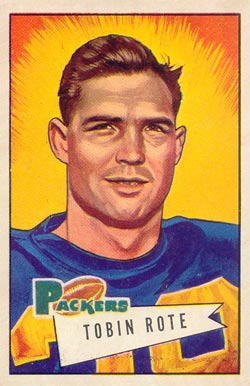
Alrighty then, Hair of the Dog, which was published after Harris’s death in 1964. Same kind of incredibly complex plot, also involving a wealthy, unlikable family we get to know in all its inglorious pettiness, but without a babe to tempt our gargoylean hero—June has him all to herself. In Hair’s unlikable family, the supremely unlikable matriarch is the murder victim, strangled during an apparent burglary and theft of her jewels and unimaginably expensive furs. Her death means instant millionairedom for most of her immediate relatives. Gargoyle represents the guy who allegedly set up the burglary, a former hockey star who never speaks—until the very end. I liked him if only for his name: Vince Lamberti. If that name sounds vaguely familiar, “Tobin Rote” might be a fruitful clue.
That name comes up in a conversation between Gargoyle and a member of the wealthy, unlikable family. My memory of listening to Green Bay Packer football games on the radio back before Vince Lombardi was even considered to take over as head coach is vivid. The team was pitiful then, although quarterback Tobin Rote (who finished his career with the Toronto Argonauts, see?) gave Packer fans an occasional frisson of hope with his passing wizardry. Those were the days, my friends, eh?
A couple other especially well-drawn characters. In Hair there’s the patsy, or “punk” who gets set up for the murder. They call hm Stoopid Easting:
Easting was something else again. He came from a chronically poor family. He was a third-generation welfare case. His parents were professional spongers. Students of social work had written theses about them to gain their degrees.” His luck was about as bad as Tobin Rote’s Packers.
Unidentified Packer nut
Gargoyle’s secretary grabs the supporting-actor Oscar in both novels. Clever, smart-tongued, efficient, etc. “Miss Georgina Semple, an elderly woman with incredible red hair piled high on her head.” See?
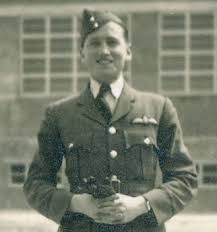
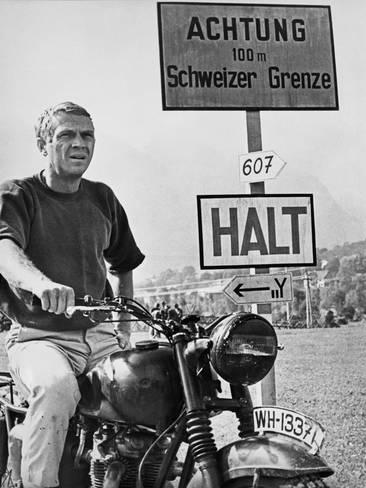
And author Harris was himself something to behold. An RAF bomber pilot during World War II, he was shot down over Germany in 1942 and spent most of the rest of the war in a POW camp known as Stalag Luft III, where, his publisher says, “he was instrumental in planning the largest prison-break in the history of WWII. The story of the breakout was eventually turned into several novels and films, including ‘The Great Escape,’ starring Steve McQueen.”
 
Eh?


[For more Friday's Forgotten Books check the links on Patti Abbott's unforgettable blog]