Thursday, August 8, 2019

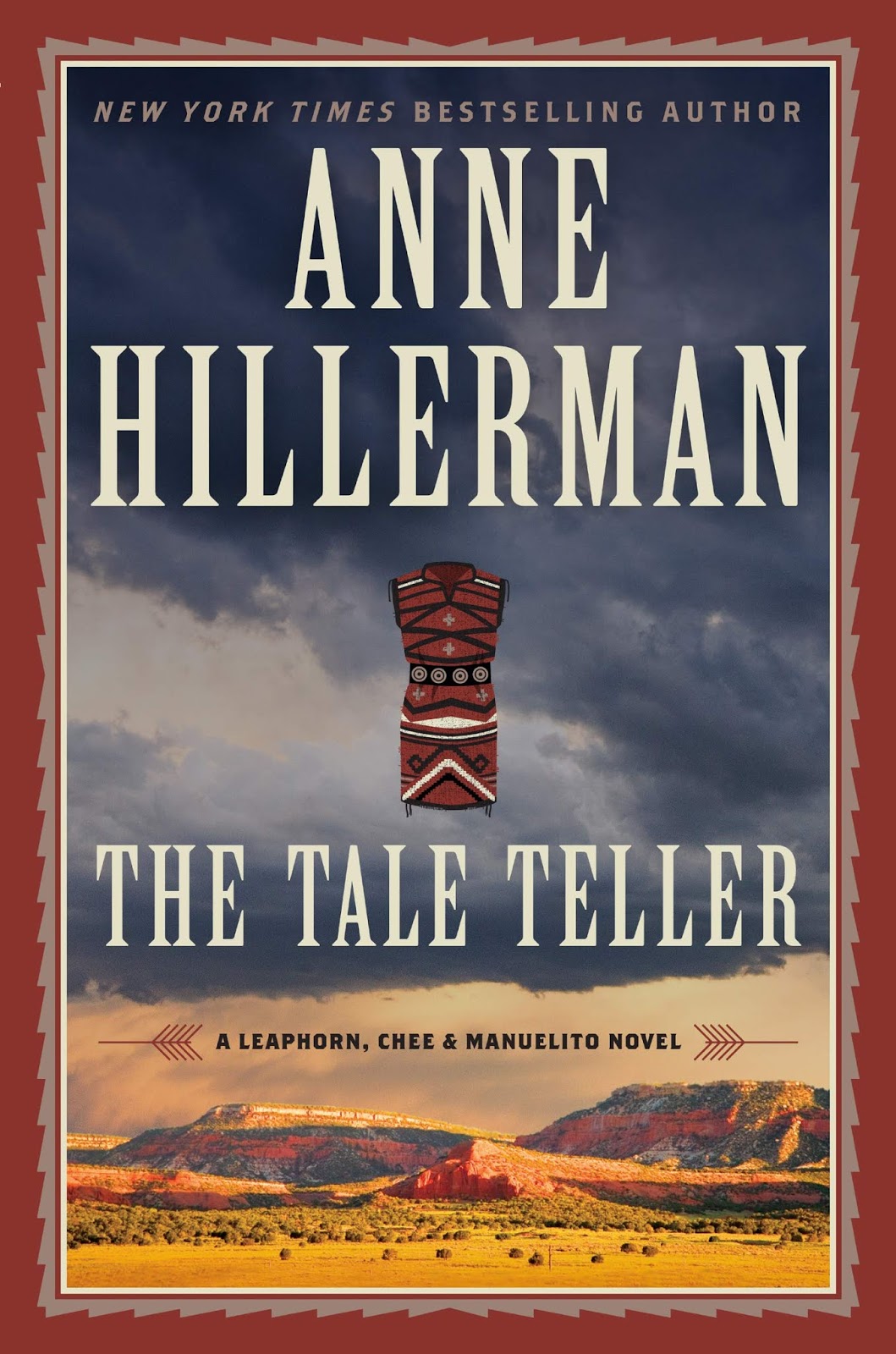
THE TALE TELLER – Anne Hillerman

I am so disappointed, my critical faculties so disarrayed by The Tale Tellers bad writing, I must warn you any gaps you might discover in this review’s syntax might well be the fault of my falling asleep during the writing. I’m not trying to excuse such lapses, but merely to note that in my hurry to complete this exercise for the week’s Friday’s Forgotten Books blogging feature readability may suffer a tad in the struggle with fatigue my lips incurred death marching thru the 320 tedious pages of Tale Teller’s leviathan swamp of redundancies, non-sequiturs, blizzard of characters, infantile dialogue, detail overkill, and virtually zero suspense. Truth be told I might just cave at some point, and file whatever I’ve written without so much as a glance for errors of any kind or attempting a snappy ending (please don’t judge me for moving my lips when I read, you know I have excuses).
So why? Why did I slog thru the damned thing and not hurl the book against a wall? Well, I didn’t have the book. OK, so why didn’t I cruelly delete it from my Kindle archive? Because books in Kindle archives cannot be deleted, so far as I know. I’ve tried, and the covers just blink as if silently laughing at me. So why didn’t I just stop reading, return it to the archive, and read something else? Good question. Not sure how to answer it. I’m stubborn--part Norwegian—I started it, and had to finish it (I almost wrote to see what came next, but the narrative fell far short of being so compelling). Maybe there was a glimmer of hope if I kept reading I’d of a sudden burst from the swamp into a musical meadow, and my heart would begin whirling and leaping and urging my lips to cease flapping sullenly and dance into song. Maybe that was the ticket. More likely it was my Hillerman jones, my addiction to Tony Hillerman’s Navajo Tribal Police series and its memorable characters and engaging plots and just enough well-placed Navajo lore and descriptive scenic beauty to pull me into his world and leave me with enough of its taste and lyrical ambience to draw me back for more and more. And then he died in 2008 and his daughter Anne picked up the legacy and kept it alive, extending the series, with the same principal characters—Lt. Joe Leaphorn and Officer Jim Chee—and adding several others, including Chee’s bride, Officer Bernadette Manuelita. I was less than ecstatic, but I read her first effort, Spider Woman’s Daughter, and found it so un-enchanting I’d forgotten I read it when I started re-reading it for last week’s FFB.
The re-read was un-enchanting, too, but I decided to give Anne Hillerman another chance. She’d written four more, so I picked Tale Teller, the most recent, figuring her craft must have improved since Spider Woman. I was encouraged by professional reviewers, one noting in the Library Journal that her writing grew “stronger with every new installment in the series.” It would have behooved me to read some of the Amazon “customer reviews,” as well, especially the pans, some of which indicated Tale Teller was the worst book they had ever tried to read. Alas, I read these comments after the fact, and found most of them expressed my feelings precisely. Altho I wouldn’t go so far as to say Tale Teller is the worst I’ve read, it is, sadly, an unmitigated stinker.
Boiling Anne Hillerman’s problem down the best I can, I would say she suffered from notebook-dumping syndrome. Writers in the newspaper business rushing toward deadline, lacking either the energy or skill, or both, to craft readable narrative from their notes have been known to simply dump everything they’ve gathered for the story onto the page. This includes the newsworthy stuff as well as all of the smidgeons, detritus, and extraneous crap they’ve scribbled down. This puts the burden on editors to shape this raw material into a story.
Anne Hillerman gives us more than we could ever wish to know about road numbers and conditions--The hogback, the road’s most interesting geologic feature, sat a few miles west of Farmington’s sprawl. She took US 64 across the bridge over the La Plata River and it became Main Street. Traffic was light, typical for a Sunday morning--geographical landmarks and traditions, weather conditions and implications—both historical and present—and...o, lort, I’m getting sleepy again… Whew! How long was I out? Anyway, even the characters dump their notebooks whenever they’re conversing. Remember the old Dragnet trope, when Sgt. Joe Friday would be questioning a witness or suspect for “just the facts,” and the dumb slobs would start telling Friday everything from the time he or she kicked his or her slats out of his or her crib up to the present including non sequiturs about uncles and aunts and cousins and neighbors and their cats and turtles and...holy Christmas, even on the show it got tedious even tho it usually made us all laff. Time was more forgiving back then. And we knew the language. Tale Teller has so many Navajo expressions, with their plethora of accent marks and pronunciation squiggles my lips damned near got charley horsed moving along with the ink.
What? You think my example of tedious unnecessary description above isn’t so bad? Maybe it’s not. Maybe it’s just a wee sample. Not enuf for a skeptic like you. Want a better example? I have one here? Just for you? You might be sorry you wished for it, but that happens in life. No? Anyway, take a deep breath. If you move your lips like I do you’ll want to spit out or swallow whatever you have there. You might try reading this real fast. Maybe I’ve missed some poetry in the cadences or something. Anyway, you asked for it. Here goes:
Interstate 40, the quickest way to Winslow, drew an abundance of truck traffic and, in the summer, a bevy of tourists in sticker-covered RVs. Unlike the orange barrels and shoulder repair work he had encountered on his way west, the two eastbound lanes lay clear of construction. They left ponderosa pine country for red rocks, piñon and juniper trees, and then flatter, emptier landscape. As many times as he had driven this route, Leaphorn never tired of it. The vast sky where he’d seen double rainbows and clouds bigger than skyscrapers made whatever problem he puzzled over seem insignificant.
...zzzzzZZZZZT!!! Uh...oh. Sorry. I was dreaming of giving you an idea of the plot, but now that I’m awake I can’t remember what I’d planned to say. How sad. And it really is time for a serious nap. I can tell you this, tho, what the title means: All Navajo weavings could be described as Tale Tellers. Each uniquely reflected its creator and the time of its creation.
And how might this fit into one of the several disparate plots in The Tale Teller? Well...frankly I can’t rightly recall. I would advise anyone who’s read this far and who might be chomping at the bit for a little something about one or more of the hodgepodge of plots to scroll up to the hyperlinked The Tale Teller (I just now hyperlinked it again, for you!), which will take you to the book’s Amazon page, where you can read the publisher’s summary. And while you’re at it you might wish also to read some of the “customer reviews,” to see how right I am with this one.
Snappy ending? Who in hell do you think I am, Norman Mailer?


[Find more Friday's Forgotten Books links at Todd Mason's amazingly eclectic blog]


Thursday, August 1, 2019

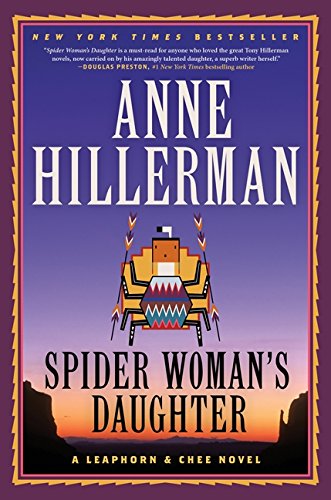
SPIDER WOMAN'S DAUGHTER – Anne Hillerman

It took the movies to awaken me to my addiction to the late Tony Hillerman's Navajo Tribal Police mystery series. I realize now the junkie that I've been since the '80s when a friend suggested Hillerman's books were well-written and—and here was the clincher—they were mellow.
So I tried one, then another, and another...until I'd read all eighteen plus The Fly on the Wall, a mystery about an investigative reporter, and then I bought Hillerman Country, a coffee table book the novelist produced with his brother, a photographer, and when I'd read all of his fiction and my addiction for Hillerman mellow had become pronounced I read his autobiography, Seldom Disappointed. Nor was I disappointed by anything of his I read. I even enjoyed the TV movies Robert Redford produced of four of the Tribal Police novels, even tho the first one, starring Lou Diamond Phillips and Fred Ward disappointed Redford so much he ditched the two actors and hired Wes Studi and Adam Beach as the two fictional Navajo cops—Lt. Joe Leaphorn and Officer Jim Chee.
And then, when Hillerman died in 2008 and his daughter, Anne, picked up the baton and continued the Leaphorn/Chee series, I read the first one, The Spider Woman's Daughter, thinking like a junkie that even tho she was a Hillerman, I'd find her writing more akin to a heroin addict's substituting methadone to kick his habit. And that is sort the way I remember my first reading of Spider Woman. In fact, my recollection of having read it was nonexistent when, unknowingly, I decided last week to read it again. I caught on that this was a second reading about a third of the way into the book. It is long, about twice as long as her father's novels, which are the ideal length for my attention span. Spider Woman left so weak an impression on me that I turned away from the Hillerman milieu and read none of the next four in the series Anne has published.
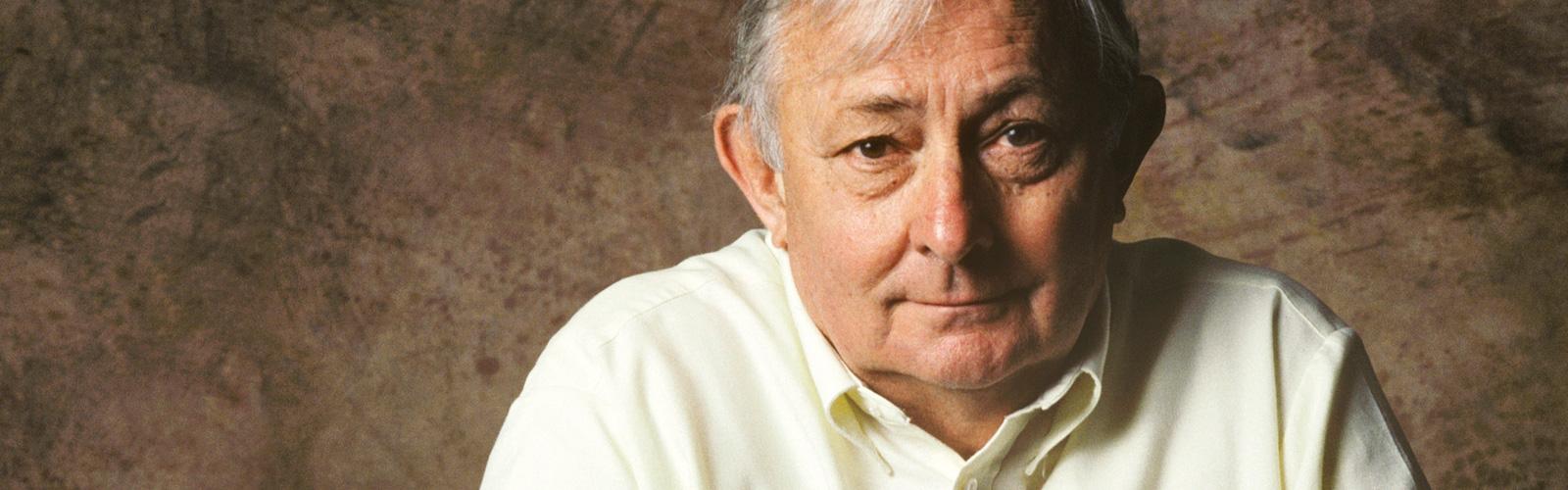
Dad & daughter

As I have trouble handling suspense in life, and can tolerate it in fiction understanding it's only a vicarious immunization, I won't try to torment any of you who might have a similar aversion to prolonged uncertainty, and say right now that while I still feel Spider Woman could be trimmed by half without hurting the narrative one whit, leaving out much of the domestic subplot lines that for me only bog down the main story, I feel much better about Anne Hillerman's writing and devotion to her father's legacy and to the Navajo and Hopi people whose lives are depicted in these novels, and I intend to read the other four. I've downloaded the most recent The Tale Teller, to see if the professional critics are right in judging Anne’s writing to have becomestronger with every new installment in the series,” from a review in Library Journal. Regardless, I’m reading them all because my Hillerman jones is back with a vengeance.
And as I said up top, the pusher was Robert Redford’s movies. I’ve recently taken to relaxing after a day of writing and loafing (with creative flummery going on in my head, of course). As I no longer possess a TV, I’ve been digging thru my collection of DVDs and rewatching some of the old favorites. Eventually wanting something new, I bought the three Studi-Beach videos and watched the first, Dark Wind (which is not on DVD) as an Amazon Prime online feature. I then went back and started rereading the novels. After the first and fourth (for reasons explained in my reviews—here--I decided to leap ahead to Anne’s. And so here we are. 
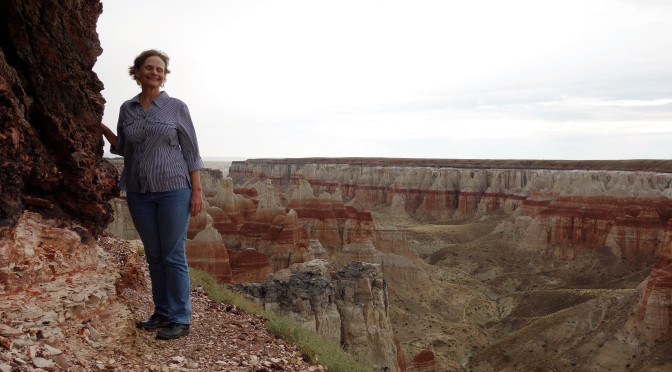
Anne in Hillerman Country
  Once I recognized I’d read Spider Woman before, I soon remembered it was, in a sense, a sequel to one of the four Leaphorn/Chee movies, which I’d just rewatched: A Thief of Time. A couple of the minor characters in Thief have advanced to limelight time in Anne’s sequel. And a new member of the ensemble cast, Officer Bernadette Manuelito, whom Tony Hillerman introduced in the latter half of his series, now has a starring role. As I recall from my first go-round with the original series, “Bernie” started as a dispatcher and eventually became a regular Tribal Police officer and the presumptive future wife of Jim Chee. If they were married under Tony’s watch, I’ve forgotten, but they sure as hell are man and wife in Spider Woman! Their married life undergoes the typical strains of any pair of young newlyweds as well as the additional pressures and conflicts of both serving as cops in the same department.
As plots go, Spider Woman’s is fairly simple—no then-there-were-none-Golden-Age-of-Mystery-Agatha-Christie-puzzle-mystery here, nosirree, Bob. Didn’t take me long to know beyond any doubt whodunnit and whydunnit, and nor would it you, and the only mystery to me is why it took so long for Bernie and Chee to figure it out, as well. But that’s not what I look for in the Leaphorn/Chee/and now Bernie novels. They’re really more police procedurals in the brutal, breathtakingly beautiful Southwestern U.S. landscape no doubt known now to millions of readers worldwide as Hillerman Country.
I should note that the “procedural” plot is not without some serious suspense involving physical danger to the main characters and some downright spooky situations forcing me to fight down the urge to shout NO, FOR GOD SAKES NO! on several occasions to keep from having the neighbors call 911. You see, the plot involves an investigation by Navajo, state and federal officials to solve the shooting of a civilian of no great political or monied significance. I’d like to keep face down the card with the identity of the shooting victim emblazoned upon it, but I can’t, because the secret will be revealed in the very next several paragraphs I’m including here as an example of Anne Hillerman’s narrative prowess. And so, as masters of ceremony typically say when it’s time to reluctantly pass the microphone to someone else, take it away, Anne!
Leaphorn strolled into the lobby, nodding to Bernie, cell phone at her ear. “Say hi to Chee for me,” he said. She watched him head toward the parking lot, noticing that he was limping a bit. She knew he had a touch of arthritis in his knee. She should have asked him about that. And about Louisa.
Hello, beautiful,” Chee said. “Done with the meeting?”
Not quite. The lieutenant had some good stories. Now the humdrum stuff looms on the horizon. Your timing was perfect.”
Through the lobby window, she saw someone climb out of the blue sedan backed in next to Leaphorn’s white truck. She watched Leaphorn walk toward the truck, extract the keys from his pants pocket.
You still grumpy?” Chee asked. “I got off to a bad start this morning.”
The person extended an arm toward the lieutenant. Bernie saw a gun. Heard the unmistakable crack of the shot. Saw Leaphorn stagger back, falling against his pickup. Crumple to the asphalt.”


[Find more Friday's Forgotten Books links at Todd Mason's amazingly eclectic blog]


Tuesday, July 23, 2019

PEOPLE OF DARKNESS -- Tony Hillerman

Of even more interest to me than the Navajo origin myths, which comprise the heart and soul of Tony Hillerman’s Navajo Tribal Police mystery series, are the stories of how he created its two main characters: Lt. Joe Leaphorn and Officer Jim Chee. For the myths, Hillerman’s research included heavy reading and personal immersion into the Navajo culture, interviewing tribal elders and attending sacred ceremonies. My research was much easier. I simply read the author’s tell-all memoir, Seldom Disappointed. Last Friday’s report was on the series debut, The Blessing Way which Leaphorn entered as an afterthought. Four books later, Chee made his entrance, reducing Leaphorn to just a name (albeit with a one-book promotion to captain) in People of Darkness.

Hillerman had intended to use Navajos only as minor characters. Relying on his long experience as a news writer, his primary emphasis would be on setting. “If the actors and the story line were weak, maybe I could make the stage scenery so interesting it would carry the book.” The lead character in Blessing is an anthropology professor studying Navajo culture. When the professor needs information from a Navajo friend, Hillerman gives him Joe Leaphorn, a tribal policeman. At this point, the author realized he needed to know more about the Navajo people in order to give Leaphorn credibility. “Making him seem genuine forced me to admit I didn’t know nearly as much as I should about the Dineh.

I talked to Navajo friends, discovered I didn’t even know enough to ask intelligent questions, and began endless hours of reading. Reading everything: various versions of the creation myth, of curing ceremonials, of witchcraft beliefs, clan structures, sand painting, social life, sexual beliefs, taboos, puberty ceremonials, place names, hogan building, etc. I read Ph.D. dissertations, proceedings of dignified and scholarly societies, collected papers of the Peabody Museum, the autobiography of Son of Old Man Hat, the accounts of River Junction Charley, and on and on and on. Now I was ready to interrogate Navajos. And the Navajos I asked were ready to recognize that I was motivated by something more than idle curiosity.”

The professor remains the central character, but Leaphorn’s is a strong supporting role—so strong he’s promoted from officer to lieutenant and takes the lead in the next two novels. And in the process he teaches Hillerman a costly lesson. Excited by a film company’s interest in the second book, Dance Hall of the Dead, he signed a contract giving the producer TV rights to the Leaphorn character. The movie was never made, but Hillerman’s star was now “held hostage.” Years later, when Robert Redford approached him about making movies of three novels, Hillerman had to pay to break the contract. He confesses in Seldom Disappointed, “Ransoming this figment of my imagination cost me twenty thousand dollars and earned me a place in Guinness Book of Records if it ever lists classic stupidities.”


Chee already had joined the People of Darkness cast by the time Redford came along. Hillerman created him, partly for artistic reasons, he said, “but also because my fondness for Joe Leaphorn was undermined by the knowledge that I only owned part of him, having signed away TV rights.” Perhaps Leaphorn’s one-book promotion to captain was an unconscious gratuity for being shunted aside—Hillerman never mentioned it--but he did admit to the occasional error: “Alas, my books tend to be noted for glitches, where I have characters drive south when I meant north, for example, or change the name of characters in the middle of a chapter, etc.” Going with “glitch” as the more comfortable explanation, Leaphorn is back on stage in the next episode, The Dark Wind, where he remains thereafter with his proper rank, co-starring as Chee’s superior up to and beyond active duty into venerable retirement where he becomes, as Chee likes to needle him, “The Legendary Lt. Leaphorn.”

But it’s all Chee in People of Darkness. We meet him as a sergeant, which I had forgotten from my first reading of the series nearly four decades ago. As I recall, and as my recollection was refreshed this time, rank doesn’t come into play much with Chee—even when he did a stint as “acting lieutenant” in a later novel. Besides introducing Chee in People, Hillerman brought in another new character, but just for this outing. Its unusually complicated plot, which “proved terribly tough to keep...from being as boring to read as it was to write,” prompted him to try something “the bona fide masters of suspense were doing. First I had to have a professional hit man— a species I have never believed in.” To add authenticity to this character Hillerman drew on a death-row interview he’d conducted as a journalist. Far as I’m concerned his fictional killer is as authentic as anyone I would ever wish to encounter in the real. This addition to the “boring” plot that has Chee methodically trying to find survivors of a long-ago oil-well explosion, along with a perky young, blue-eyed single schoolteacher who joins Chee on the search, ramps the story up to a suspense level well worthy of those “bona fide masters” whose success had inspired him. 
 
With the ingenuity of a magpie building its nest, Hillerman made use of odd idea scraps he picked up along the way, such as his detailed description of the three WWII medals—a Purple Heart, the Bronze Star, and the Silver Star—found in the mysterious “keepsakes” box of a character. Hillerman had received all three himself in that war.

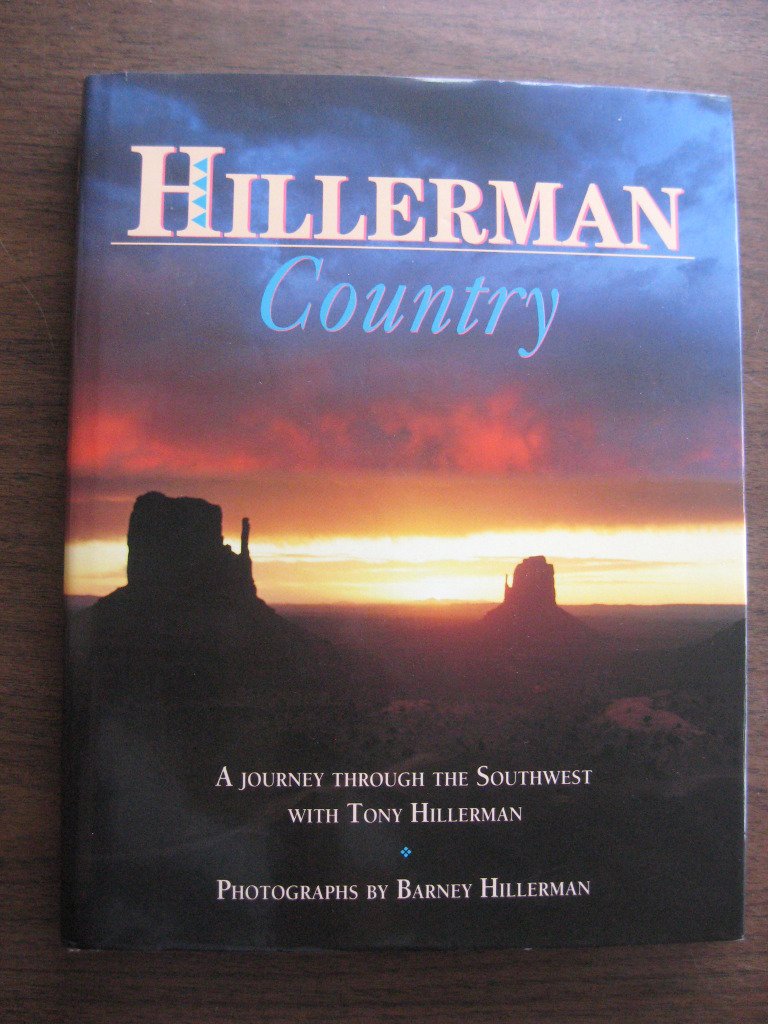
His research for People led to a joint venture with his “big brother,” Barney, a geologist who specialized in analyzing core samples at oil-drilling sites. On a visit to a site in Texas, where Hillerman kept an eye out for plot ideas, the two cooked up the idea that led to the successful photo book they called Hillerman Country. Barney had been thinking of leaving his nomadic life chasing oil wells and turning his photography hobby into a career. Their mother’s health had begun failing, and Barney, still a bachelor, decided to build a house to share with her. Some years later, with Barney now married and with three adopted children, the two brothers decided to tackle the project they’d talked about, to try to capture in words and pictures the Four Corners country that provides the distinctive background for Hillerman’s Navajo Tribal Police novels.

In one of the several boxes of books and sentimental keepsakes I have yet to unpack from a couple of moves ago, rests my strikingly beautiful, coffee-table-size, clothbound copy of Hillerman Country, which, thoroughly hooked on the mystery series by then, I’d bought when it came out in 1991. Hillerman adds a characteristically self-deflating note to the story, this one with a sad twist. 


The experience taught me that, published author or not, one’s role as Little Brother lasts as long as life,” he confessed in Seldom Disappointed. “Before [Barney] had a chance to notice that the reviewers were more impressed with his landscapes than with my text, he had a sudden and fatal heart attack while shooting another assignment.”


[Find more Friday's Forgotten Books links at Todd Mason's amazingly eclectic blog]


Thursday, July 18, 2019

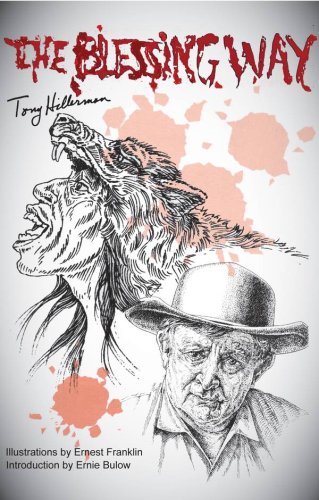
THE BLESSING WAY – Tony Hillerman

By the way, The Blessing Way is really The Enemy Way, as Tony Hillerman reveals in his memoir, Seldom Disappointed: “I named it The Enemy Way but my editor for reasons beyond my ken changed that to The Blessing Way.”
Frankly, my dear, I don’t give a big cahoot which Way is the Way. Each is way too complicated for your everyday Belacani, yet, perhaps because of this, all the more fascinating. Belacani? That would be Navajo for “white man.” If nothing else, Hillerman’s 18-book Navajo Tribal Police mystery series is a good way to learn a few Navajo words along with a great deal about the culture and religion—known collectively as “The Navajo Way”--of these early Americans. So accurate are the Navajo depictions in these novels they were used in Navajo schools, and earned for Hillerman the tribe’s Special Friends of the Dineh Award.
This is my second go at the Tony Hillerman canon. I read them all in the ‘80s after a friend recommended them. I suppose instead of re-reading these I should leap ahead and read at least one of the five Leaphorn/Chee mysteries by his daughter Anne Hillerman, written since Tony’s death in 2008 at age 83. Not sure why I haven’t read any of Anne’s yet. Some sort of superstition, maybe? A witching thing? I can’t rule that out, but for the sake of Belacani probity I hereby promise: after reading People of Darkness, which I’ve already downloaded because altho it’s the fourth in Tony’s series it’s the one that introduces Jim Chee, I will read Spider Woman’s Daughter, the first by Anne carrying the baton from her dad.
Chee starts in the fourth, you say? You mean...yup, Lt. Joe Leaphorn soloed in the first three. Patterned after Tony’s friend, who was sheriff of Hutchinson County, New Mexico, Leaphorn was to carry the load alone forever and a day, until his agent and publisher persuaded him to swing for the bleachers, write a “break-out” book, with elements reaching a wider readership...
I had started this book with Leaphorn as the central character, but by now my vision of him was firm and fixed. Leaphorn, with his master’s degree in anthropology, was much too sophisticated to show the interest I wanted him to show in all this. The idea wasn’t working. This is the artistic motive. Behind that was disgruntlement. If any of my books ever did make it into the movies, why share the loot needlessly? Add greed to art and the motivation is complete. Thus I produce Jim Chee, younger, much less assimilated, more traditional, just the man I needed.
Not sure which I read first as my introduction to the series, but I’m pretty sure Chee was in it, because in my recollection when Leaphorn eventually appeared I thought he was the new character. Evidently someone involved with Harper & Row’s ebook reissue chose convenience or marketing reach over accuracy, as the The Blessing Way, Tony’s first novel, is listed on Amazon.com as “A Leaphorn and Chee Novel Book 1.” The listing fooled even me, the Hillerman veteran, wondering when Jim Chee would enter the picture until I clicked over to Seldom Disappointed and found out what in hell was wrong.
Not that there is anything wrong with The Blessing Way—other than its title--which features an Enemy Way, a much longer and more complex ceremony held over a three-day period to counter the magic of a witch that’s infected an individual or family. A Blessing Way involves much simpler rituals, including a sweat bath and a medicine man’s “sing.” I’ll admit to getting thoroughly confused reading Hillerman’s intricately detailed account of the Enemy Way in The Blessing Way, where the focus is on a contagious fear among reservation families that a witch, taking the form of a Wolf, is running amok, killing and mutilating animals, and suspected of killing a young fugitive hiding from police in the reservation’s cliffs and canyons.
But I wasn’t alone. Leaphorn admits to himself to being almost hopelessly confused as to the who and what behind the witch scare, and why and how Luis Horseman was killed and dumped beside a public road to be easily found by anyone happening along. Tossed into this mix are a couple of professors doing research on the reservation, one of them coincidentally studying the Navajo witch tradition. Hillerman manages his complicated unusual plot with surprising skill for a first novel. I believe a key to my quickly trusting Hillerman’s command of the story was his having the strong, intelligent character of Leaphorn struggling to comprehend what was going on as well. And I should add that far from being a police procedural, Leaphorn’s physical presence is largely incidental to the main narrative. It’s his mystery to solve, but other, supporting characters are drawn so keenly and fully in their involvement, their peril, and their inner conflicts that I found myself engaging sympathetically with them more than with the cop. Yet, his role is so vital and indelible, and his persistence so reliable I had no doubt ultimately he would prevail.
Hillerman, UPI reporter


Earlier I mentioned Hillerman’s skill as a writer. As a wordsmith, a painter of detail and panorama, sound and smell and interior landscape, he has given us a debut novel that steals the breath away. Here’s a scene through the eyes and senses of Dr. Bergen McKee, the anthropologist who’s studying the Navajo witch phenomenon:
“McKee had been startled by the sudden brighter-than-day flash of the lightning bolt. The explosion of thunder had followed it almost instantly, setting off a racketing barrage of echoes cannonading from the canyon cliffs. The light breeze, shifting suddenly down canyon, carried the faintly acrid smell of ozone released by the electrical charge and the perfume of dampened dust and rain-struck grass. It filled McKee’s nostrils with nostalgia.
“There was none of the odor of steaming asphalt, dissolving dirt, and exhaust fumes trapped in humidity which marked an urban rain. It was the smell of a country childhood, all the more evocative because it had been forgotten. And for the moment McKee...reveled mentally in happy recollections of Nebraska, of cornfields, and of days when dreams still seemed real and plausible.
The light of the climbing moon had moved halfway across the canyon floor. Nothing stirred. The canyon was a crevice of immense, motionless, brooding quiet. McKee studied the outcropping carefully, shifted his eyes slowly down canyon, examining every shape under the flat, yellow light, and then examining every shadow. He felt the rough surface of the rock cutting into his knees and started to shift his weight, but again there was the primal urging to caution.
It was then he caught the motion.”
For an ex-newspaperman’s first major leap into fiction, this simply should not have been ignored by any publisher, major or minor. That it was, initially, because “No one will read about Indians,” says more about the publishing biz than tales from the Rez.

[Find more Friday's Forgotten Books links at Todd Mason's amazingly eclectic blog]